
Keeping the game alive: what community college athletics gave to Tyler Cook
Published on: October 12, 2026
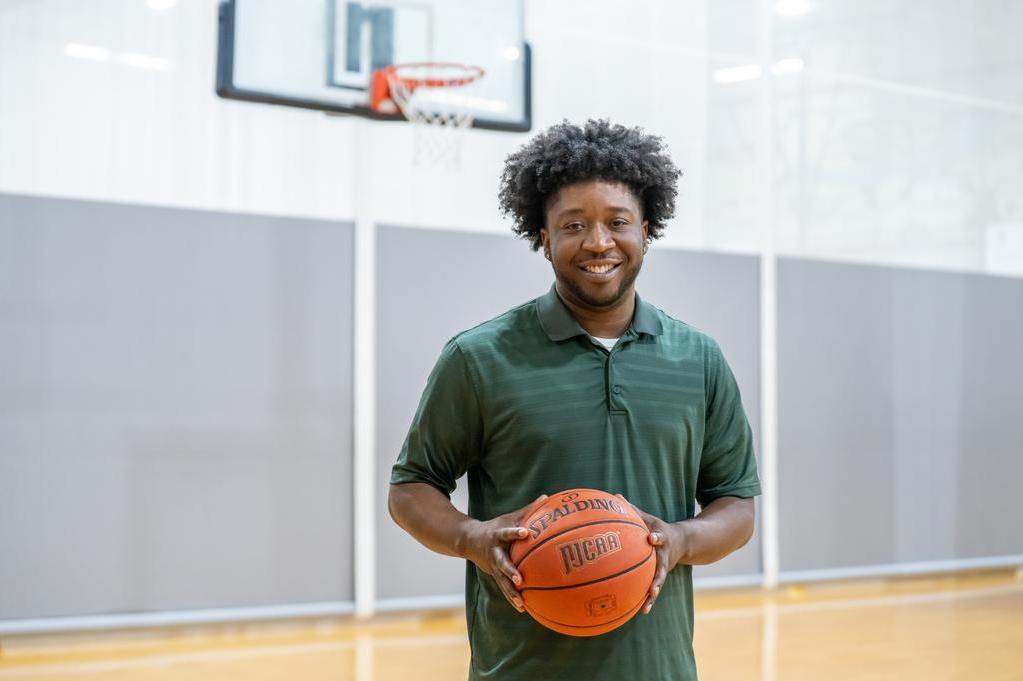
Tyler Cook was working at FedEx when a coworker encouraged him to try out for the men’s basketball team at Guilford Technical Community College. It had been four years since he had played.
Cook grew up on the game and was good enough to draw college interest in high school, until knee injuries ended that.
“I tore my meniscus and PCL, and that took a lot of college interests away,” said Cook.
His story is a familiar one. Many young people grow up playing a sport they love, only to walk away from it after high school. Cook nearly did.
“Even though I hadn’t played in four years, I decided to try out,” Cook said. “I made the team.”
He did not just make the roster. Cook later returned as an assistant coach, the role he holds today.
Playing sports for a four-year university requires a lot of skill and time. Playing at the community college level gives students a chance to keep competing after high school.
Of North Carolina's 58 community colleges, 21 offer athletics. GTCC is one of those 21 offering men’s and women’s basketball, women’s volleyball, men’s baseball, and esports.
Kirk Chandler, athletics director and men’s basketball coach, said the competition is serious.
“Athletics at the junior college level are very competitive,” Chandler said, noting that GTCC’s Region 10 is one of the strongest in the country.
In Cook’s second year playing basketball for GTCC, he was injured again and once again found himself on the sidelines. Many would see it as a letdown, but Cook used it to his advantage. He took it as an opportunity to grow his leadership skills.
“I learned a lot that year being on the sidelines,” said Cook. “Listening to the coaches and watching helped me improve as a player and improved my basketball IQ.”
Beyond building his leadership skills, Cook learned the discipline it takes to be on a team. He made sacrifices, like turning down outings with friends and avoiding late nights so he could rest and prepare. He also stayed disciplined with his diet.
With the mental and physical discipline came discipline of character.
“As a student athlete, you’re representing yourself, your family, your teammates, and the college,” said Cook. “Being on time, being present, being disciplined, and all those little things make a team great.”
That discipline taught Cook the lessons he needed to become a young adult.
“There are so many life lessons I learned through the game of basketball that I was able to apply to the real world,” said Cook.
Along with the life skills gained through junior college sports, something else is gained: camaraderie.
To Cook, creating chemistry on and off the court makes a difference in a team's success. Building a relationship with teammates makes communication easier, ultimately leading to more success.
Cook explains this relationship as a brotherhood.
“I cherished every moment being part of a collegiate team, brotherhood, and family,” said Cook.
Cook continues this camaraderie and friendship as a coach. He encourages team bonding and open communication. He even stays in touch with many alumni because of the relationships and bonds he’s built with them over the years.
“I get to guide these young men who were in the same spot as I was to accomplish their goals,” said Cook. “I love being able to help, motivate, and give advice to these student-athletes.”
Cook encourages his players to build those relationships off the court, too.
"I stress to the team all the time to spend time together and get to know one another on a personal level," Cook said. "Bonding events like bowling, arcades, or even something small like going to study hall together can really help build a strong connection."
For Cook, coaching is a way to stay close to the game that shaped him and to give the next group of players the experience that once pulled him back onto the court. The player who thought his time in the sport was over now helps make sure it isn't over too soon for someone else.
Chandler sees what that investment brings to the program.
"Tyler is an excellent example of taking advantage of what's in front of you," Chandler said. "I rely on him heavily, because I comfortably can." Back to All Articles